And then there is another generation – skipping one. Although the generation that skipped, that of my son, did cross the ocean several times, it never settled down there, was never permanent. The last generation to cross the ocean, once more east to west as her great-great ancestors had done, is my granddaughter.
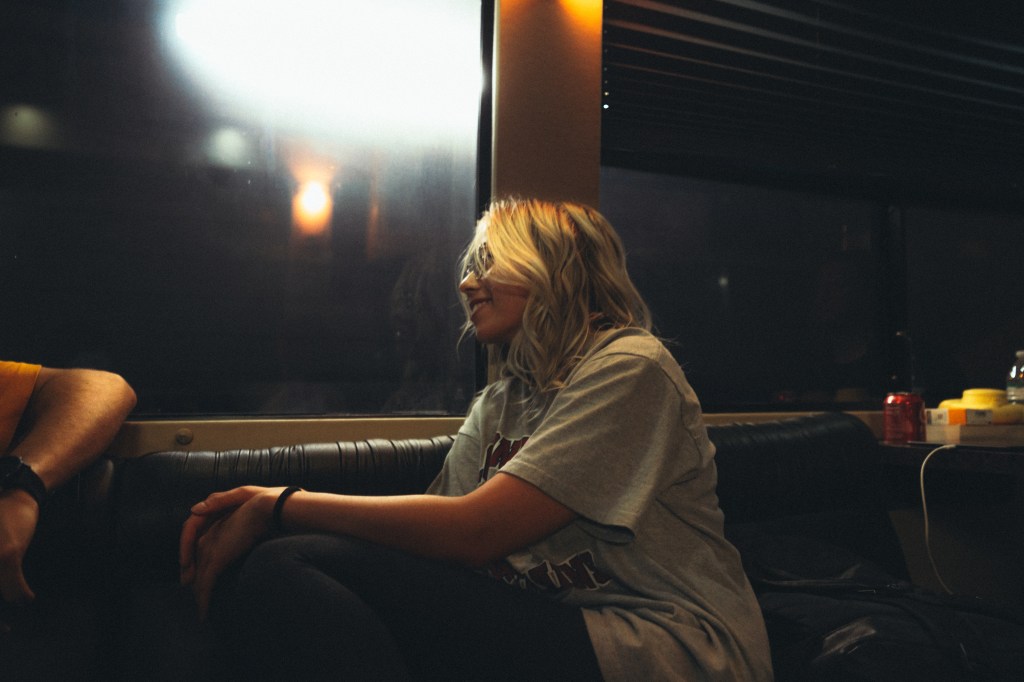
The new world she faced was certainly more familiar to her than that encountered by previous generations. Travel, foods, ways of communication had changed radically in the over a hundred years since her great great grandmother had been plunged into a completely different world. Globalization had taken place and traveling hundreds of miles in a few hours was normal, as well as eating Japanese food in Italy or talking with someone on your phone, live, as they show you what they are doing. This last young woman to cross the ocean and make her home in a country other than that of her birth has also been roaming the world, spending time in Japan and touring all of Europe as well as the United States.
One of the things my grandmother and my granddaughter did have in common though was music. It might not be the same kind of music, but it is an essential part of my granddaughter’s life, of her surroundings, as it is now of most young people in the western world. The type of music has changed for I can only imagine what my grandmother, used as she was to etudes and Lieder, would have thought of the music her great granddaughter listened to. Nor would she have understood the music her granddaughter, meaning me, loved, including jazz and folk songs as well as Bach and Beethoven.
Fightem bockes belong cry, if this was the description of a piano by a dark-skinned native of an island in the South Pacific, what would he have thought of the sounds coming from a radio in the 21st century? They were sounds so unlike anything he heard when his “witchdoctor “peers beat their drums although there would have been shared qualities such as rhythm, and there would have been a meaning to that pattern of sounds that our European minds could not comprehend. The sounds themselves might have seemed a cacophony when compared to what our ears were used to.

Yet strangely enough, the music of these drums would have been more in tune with our civilization of 2023. My granddaughter would have danced joyfully to the beat. She would not have understood what it was communicating, which was directed only at members of the community. It was certainly, as one definition of music says, a combination of sounds and silence in an organized fashion, a language expressing emotions and information through the elements of rhythm. While the definition includes melody, harmony and color, these last three elements might have been lacking and even the episodes of silence would have been different.
I must admit that much of the music that is now part of my granddaughter’s life doesn’t speak to me as it does to her. Although what to her is music is not completely alien to me. I understand it better than I do, say John Cage or the computer compositions of Karlheinz Stockhausen, or the extremely intellectual pieces of a friend of mine, who expects us to listen for an hour to the random sounds of our surroundings, which he defines as “music”.
But aside from this, music is an inescapable part of the world of sound for this most recent immigrant/emigrant as it is to most of us born at the end of the 20th and in the first quarter of the 21st century. Music is no longer something limited to a specific time or place, for unless we go into the desert, or the jungle, man-made sounds, whether you consider them music or not, are ever present. Were we better off then?
 Erika Bizzarri
How fascinating to be able to draw comparisons and contrasts between the worlds of your grandmother and your granddaughter, Erika! Perhaps the world of the young would be incomprehensible to a nineteenth century person. And the comparison of music is a marvellous touchstone.
LikeLike