Una disgrazia.
In other words
what bad luck
to be in Italy and
not be able to eat
Of all places –
Italy!
You might say but the same could be said of Spain, or France. Of Morocco. Or Hong Kong.
But Italy! A greater misfortune cannot be imagined.
Spaghetti alla carbonara.
Tagliatelle with truffles.
Roast pig stuffed with wild fennel and garlic and with crackling crust.
Pizzas straight out of the wood-burning oven.
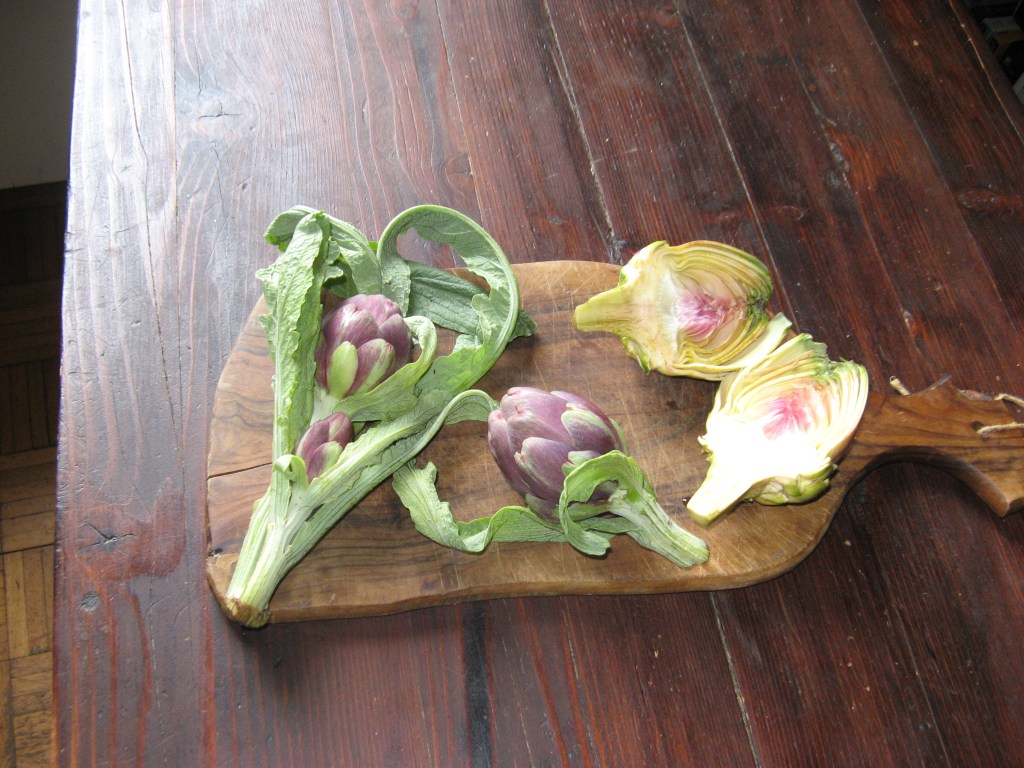
Artichokes to dip leaves in oil and scrape them with your teeth, which at the moment you no longer have.
Melon or luscious purple figs and rosy prosciutto.
Tomatoes that taste like tomatoes.
Fire-grilled sausages.
Fried seafood, crispy shrimp and squid.
And the cheeses, milky ricotta, sheep and goat cheeses, soft or aged like parmesan.

Time passes and one is not what one once was. Even if . . . well, no matter what, one still has a lifetime of memories. There’s a short story by Tabucchi, “la signora Multipla Seicento”, where that memorable Italian family car of the late 1900s, her ailments under scrutiny at the doctor’s (read mechanic’s), realizes she has come to the end of her days. Sort of like me. But that seicento too had a lifetime of memories.
On the other hand, if you’re willing to compromise, and really can’t sink your teeth, which momentarily you don’t have, into a crusty fresh baked bun with mortadella, or nibble on potato chips and peanuts as you sip a glass of wine, there is cream of chickpea soup, or zucchini picked that morning and squashed with your fork. Pureed lentils and mushrooms also make a passable alternative. Then there is ice cream and tiramisu, soft enough to slither down your throat without being chewed. Avocados aren’t bad either. Ricotta and even mozzarella. And of course, yogurt and bananas.
It’s not simply the food though. For eating is primarily a social event. True, one can, although unwillingly, eat by oneself. Go to a restaurant, sit alone at a table set at least for two. Order a glass of wine – no problem there – and see what else on the menu might tempt you even though you have no one to discuss your choices with. Eating was always meant to be shared, a celebratory rite, from birth to death. Immortalized in depictions of the banquet for the living, and for the dead.
I have an ale bowl once used by the Vikings on special occasions, like baptisms or deaths. The participants would take turns draining the bowl, and the party was really successful when they all got dead drunk.

A rite to celebrate the events of the year, nature and her yearly rounds. It means going to a local fair and partaking of this year’s fragrant red aleatico accompanied by small fried smelt from the lake of Bolsena and porchetta and buying ropes of garlic for use during the year. Or gorging on fried porcini mushrooms at the autumn festival. Even if one goes alone, one never stays that way for long, for those who come to sit at your table quickly become new friends.
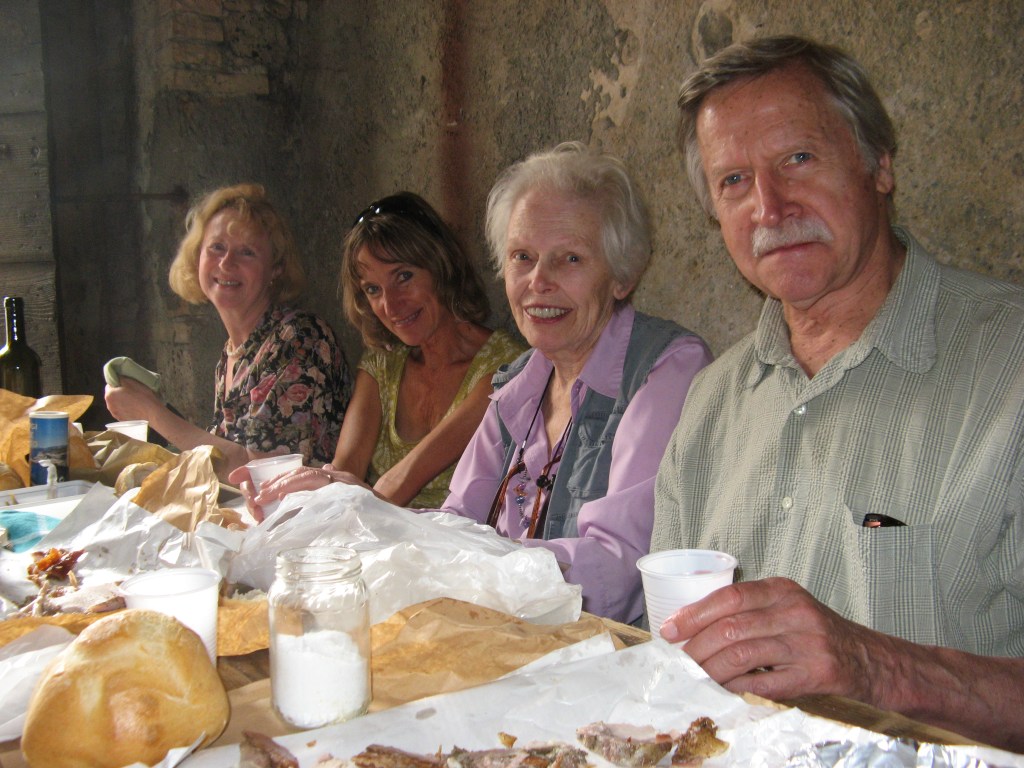
From Homer to Beowulf, Proust to Camilleri, a ten-course feast, a madelaine with a cup of tea or a Sicilian arancino, food has been, and will always be, part of life’s traditions. The cinema, like Babette’s Feast, and literature, from Doctor Seuss and Green Eggs and Ham, to Pearl Buck and The Good Earth, and countless others, all bear witness to the importance of FOOD and of sharing a meal. And if you can’t eat, you can always dream.
(postscript – since I have Italy on my mind, I’ll leave you to add turkey for Thanksgiving and Easter lamb and ham as well as whatever is traditional for your fourth of July)

 Erika Bizzarri
Indeed. I was made so hungry by your post and so sad th
LikeLike
Oh Erika!
<
div>Aga
LikeLike
That’s a wonderful list of Italian foods. Eating any one of those dished would transport you to Umbria. But, sad they need to live in memory just now. Piano, piano…you will be able to enjoy them all again. And the special experience of eating together. We look forward to shared meals , with you especially. Hugs James
LikeLike
In addition to our mutual love of words, Erika and I are both dentally challenged. What an interesting coincidence that her graceful acceptance of her latest dental issue should have come up in the context of this Disgrazia” piece—a word I associate with the French term for a “false friend.” Wikipedia says, “The term was introduced by a French book, Les faux amis: ou, Les trahisons du vocabulaire anglais (False friends, or, the betrayals of English vocabulary), published in 1928.”I’ve never had a truer friend than Erika and we have kept each company through many dental adventures. Here’s a bit more on that subject—
http://franceoritaly.blogspot.com/2016/01/meeting-at-our-dental-salon.html?m=1
LikeLike