There’s a monument in what looks to be a park,
hemmed in by a sandy area reserved for cars
and the wall of a derelict building, once a hospital.
Twelve trees, holm oaks, magnolias, an evergreen,
shade the little-used road and the nondescript grassy areas
littered with dried leaves, a few plastic bottles
and a sporadic beer bottle
discarded by some thoughtless student.
Now scratching grounds for dogs,
an occasional vagabond cat
hopes for handouts from the tourists
who venture to the edge of the cliff
to take that classic photo of
the centuries-old abbey in the valley across the way.
About half way down
a row of white travertine blocks of different heights,
some almost benches,
are capped by bronze green patina slabs.
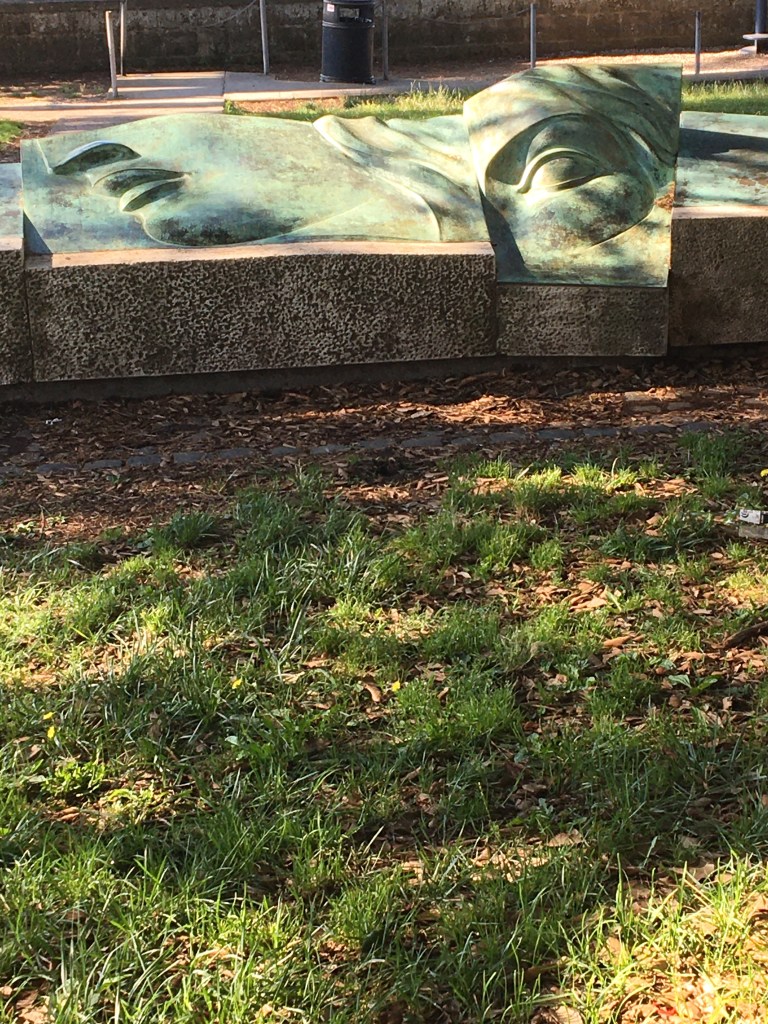
This then is the monument.
A monument they say
to those who died on the job.
Their children may once have played here
in this undistinguished little park
but their names have foundered in the sea of memory.
An eye, lips, a cheek and nose,
a partial face, surely of a woman,
classical in their beauty,
emerge in bronze fragments
from that sea of memory.
You wonder how many now know
whose hand shaped those features.
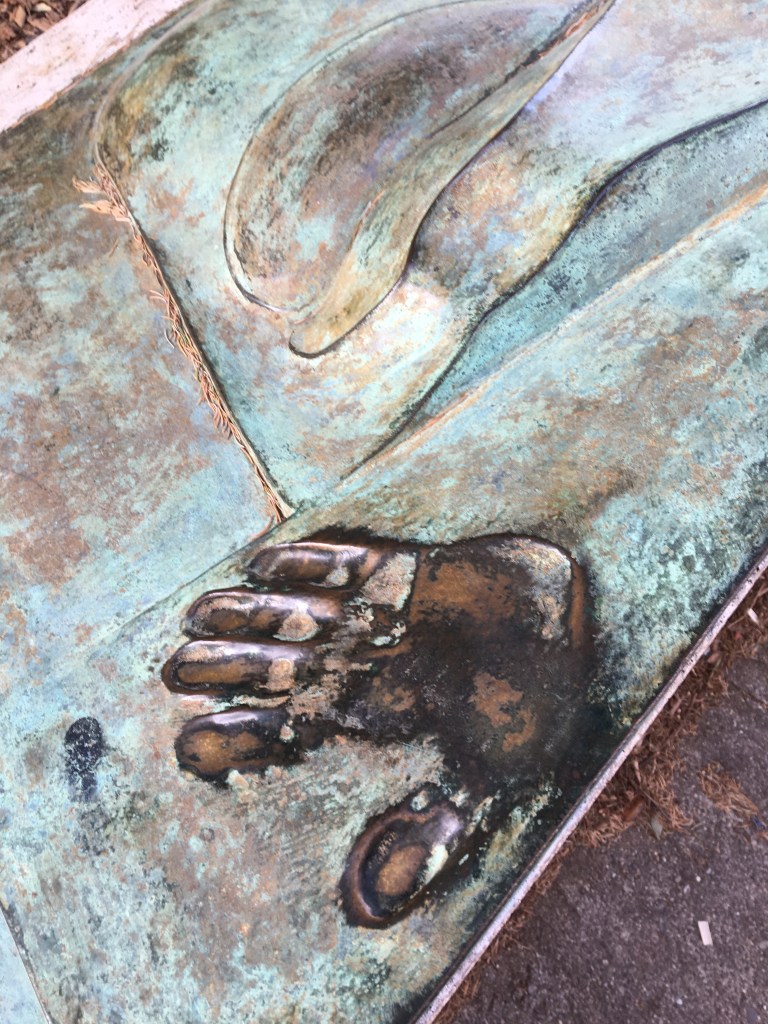
The first slab as one moves on past a cat
who ignores our passage
bears the imprint of a hand.
It’s not modeled like the eye and lips
but seems more of an improvised thought
impressed in the soft clay before casting.
The signature perhaps of the artist
who has joined those nameless many
who died on the job,
who had to die to be remembered.
Millennia ago, our stone-age ancestors
left handprints on their cavern walls,
a sign that they too had existed.
 Erika Bizzarri
Dear Erika; Thank you for this informative poem. I have several times wandered across that little park (always it seems there is a cat or two hanging out there) and over to the wall to take the very photo your described. I never counted the trees but I take your word that there are 12 of them. As I walked I would glance at the bronze sculptures sitting on that short wall, almost a bench as you said. I never knew the purpose or why it use there. Now I know it is a monument to those who died on the job. But I am still left wondering; what job? The building of the Cathedral perhaps, or just any job that took their life. I always look forward to your posts, Thank you, Mike
LikeLike
To me this piece is full of mystery and contrasts. I should probably recognize the spot, but I don’t—at least not yet—which fits with the anonymity of those workers who died on the job to whom it is dedicated and the artists who had the noble idea to celebrate them.
Although we will never know their names, I admire the impulse, theirs and yours, to leave a mark that they existed. Through the power of your voice you have made me want to seek out “this undistinguished little park” where ““their children may once have played” yet “their names have foundered in the sea of memory.” Despite its neglected state, the site feels full of Grace. Grazie to them and to you.
LikeLike
I love reading and hearing your writing, Erika.
Our writers dinner was a feast of talent.
By far, your reading of Jim’s story was the best of the evening.
I had never heard it before.
Thanks for bringing his words to life.
<
div>I’m sad th
LikeLike
That’s nice Erika, and an interesting postcard from Orvieto. I enjoyed the sudden leap into the deep past too.
LikeLike
Erika, this is fascinating. Now i want to know the origin of the park, when it was created, and the impetus for it. And how you came to it.another conversation over coffee and a pastry when we are together again. We have been fans of alan bennett’s plays— including the lady in the van, which we saw with maggie smith as the eponymous lady, and the history boys— and of beyond the fringe, but i was unaware of the uncommon reader. One more addition to my book list! Not much news from here.i have been driving back and forth to washington for various dr. Appointments, all innocuous. Counting the days til we return on september 15 to the paradise of porano.and sending love from both of us, margaret
LikeLike