When I lived in New York studying at the university, most of my friends were Jewish. It was something I simply took for granted. They might have been Greek or Albanian or Indian. Most of them paid little attention to the fact that my family was of German stock.
But it was not until I was in my 30s, visiting a friend in New York, with whom I had also worked editing the McGraw Hill Encyclopedia of World Art, that I first encountered the term Holocaust, a word that was unknown to me. We had never talked about the Holocaust and I could not understand why my friend refused to read a few pages written by a Palestinian friend when he returned to Israel and to the land that once belonged to his family.
Now I find so much of what I read has to do with memories of the war and the destruction of whole cities by allies and enemies. What happened is beautifully described by Edmund de Waal and above all by Anne Michaels, although her descriptions are in the form of poetry and novels. In her book The Winter Vault, much of which is about survival and reconstruction of what was once a city, of the people who lived there, I remained haunted in particular by the story of burning the pages of a phone book. (p. 220-221, 223).
“One morning they (two people who had found each other and sought comfort in the stories they told each other,) woke and the house was cold….They had to start the fire. While she huddled under the blanket, he used pages of old phone books as kindling, choosing a letter at random and declaiming names and addresses aloud before crumpling the pages…
It’s as if there’s a connection between those names that we’ll never understand. …As if something important is being disregarded.”
Anguished she pleaded with him not to” burn the phone books… Perhaps it’s foolish. but I can’t bear to see those names burning. It’s as if no one will be able to find anyone again. It’s like breaking a spell.“
Phone books did once mean something. It was as if they were inhabited by ghosts who might materialize if you spoke their name. They continued to exist as long as someone could pronounce their names. And now that phone directories no longer exist? How much we have lost.
In a sense, it’s what I feel about destroying photographs, even though I have no idea who these people, in those old black and white photographs in a box under the chest of drawers, were. They were university acquaintances of my husband, who died in 1968. But they too are now all ghosts. I may know their names but they are meaningless. We can only guess what they liked to eat, the music they listened to. Hear faint echoes of their laughter as they remembered some outrageous tricks they played on each other or how Mario, a bosom friend to all of them, made fun of their professors. Their overcoats and baggy trouser tell us it must have been in the 1930s. But where did they come from? Where did they live?
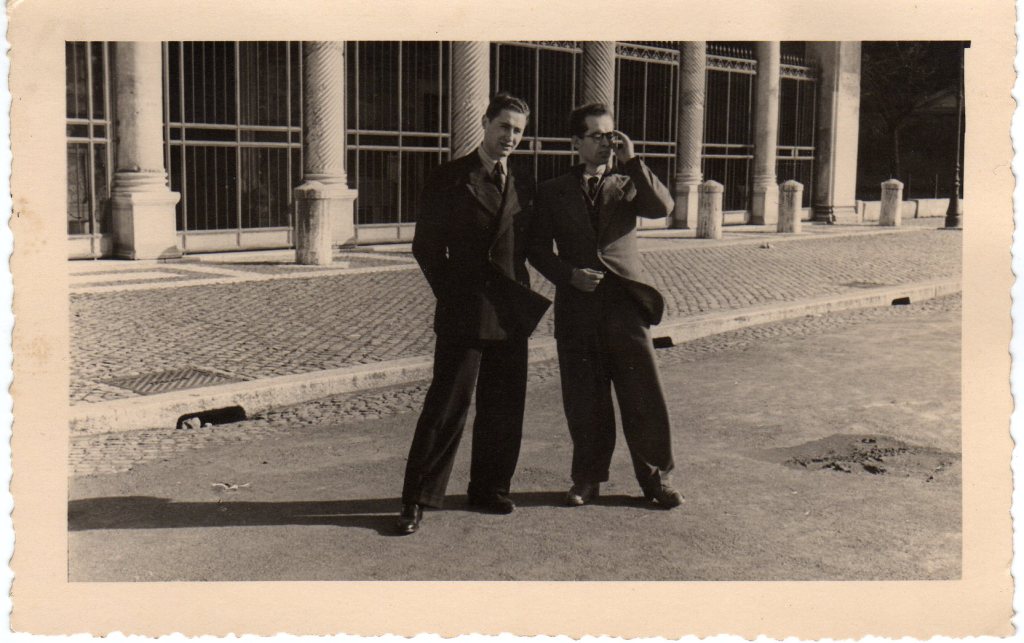
In a phone directories, we have names and the streets people lived on. They hover in the air solely as a printed word. In photographs they are also ghosts but perhaps a bit more material.
Phone books were once also a way of finding people and not just creating a context for them. How much we have lost now in the 21st century when phone books no longer exist. In his novels Andre Makine used phone directories as a way to track down long lost friends. What would he have done today? Search the internet I suppose.
I have duplicates of photos of my children when they were two or three or five years old. Why don’t you throw them out, friends tell me. You already have then in an album. But a photo captures the soul of the sitter and cannot be discarded. We cannot burn the pages of a phone book, without being aware that these were people like ourselves who lived and loved. And while my children are now close to the age of retirement, in the photographs they are still there, many times over, as they were 60 years ago.
 Erika Bizzarri
As usual, how insightful are the links that you make here—war memories, the allure of phone books, photos too precious to destroy even if they have been digitalized!
A favorite bittersweet moment in addition to the title itself: he used pages of old phone books as kindling, choosing a letter at random and declaiming names and addresses aloud before crumpling the pages…
This is from Diane writing from a distance, but as always, your voice is right here with me.
LikeLike